The 10-Step Ritual Isn't New — and You Probably Don't Need All 10
September 3, 2026
K-pop and K-beauty have put multi-step skincare, and the pursuit of what's usually described as "glass skin", in front of more people than any single skincare brand ever could on its own, and it shows up here in a very specific way: clients arriving curious about a ten-step routine, sometimes almost apologetic about wanting to ask. There's no need for the apology, and there's also a genuine observation worth making before getting into the steps themselves — none of this is actually new. Step-by-step layering to support the barrier and get more out of each product is something professional skin therapists have taught for decades, and d'reena has been teaching exactly that since 1987, the better part of forty years now. What K-beauty did wasn't invent the idea; it repackaged it into something ritual-based and genuinely appealing, and that's worth real credit rather than a shrug — it got people who'd never thought seriously about a routine to start caring, daily, and daily consistency is most of the actual battle in skincare.
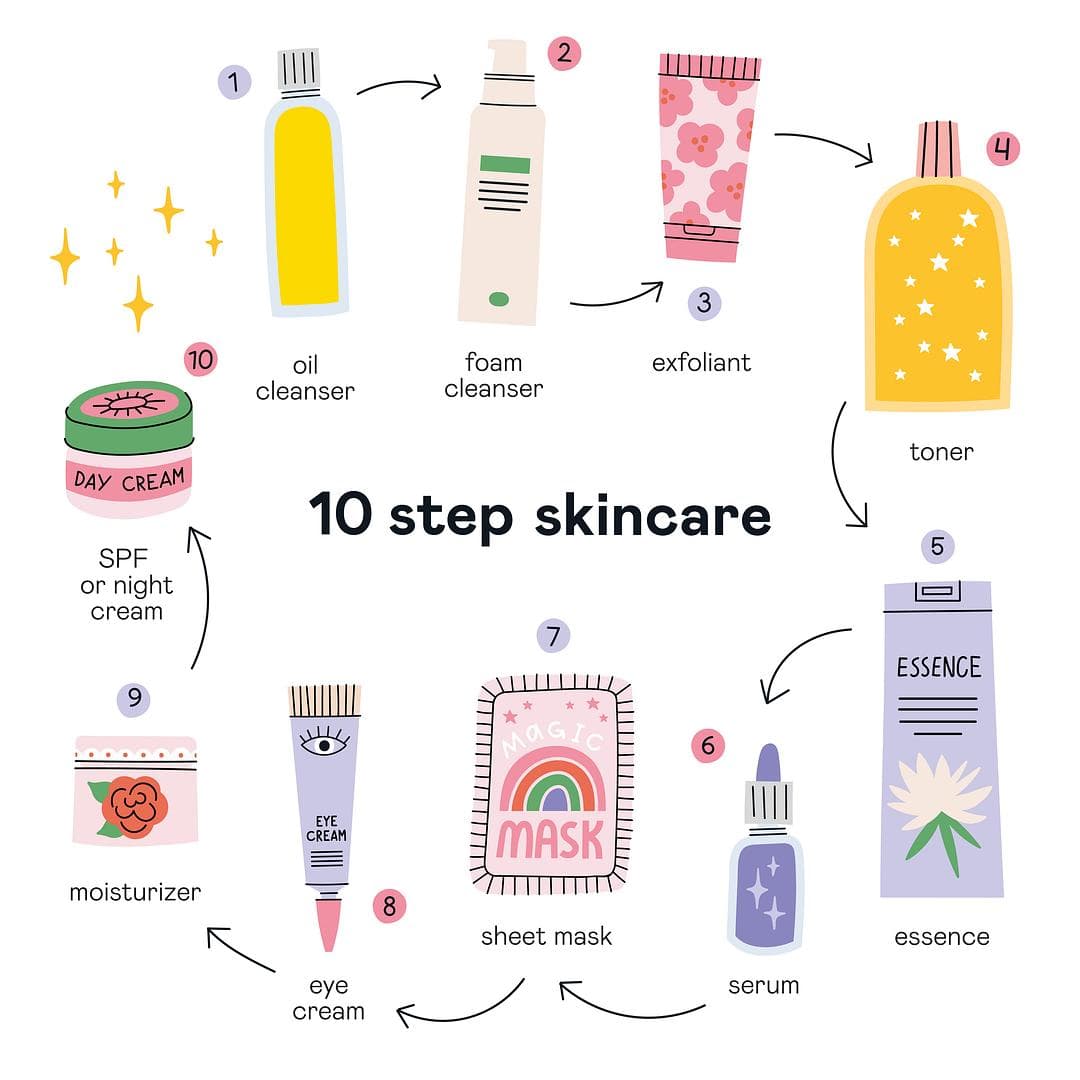
The reason the order matters isn't ritual for its own sake — it's straightforward logic about how products actually absorb. A heavier, more occlusive product applied first sits on the surface and blocks whatever comes after it from properly reaching skin, so the sequence runs lightest and most water-based first, building toward heavier and more occlusive last, so each layer can still absorb rather than being sealed out by the one before it. Walked as a flexible menu rather than a fixed prescription: an oil cleanse first to lift makeup and sunscreen, a water-based cleanse to finish the job without stripping, exfoliation on the days it's actually needed rather than every day, a toner to rebalance and prep skin for what follows, an essence or serum to deliver the routine's actual actives, an occasional mask for a concentrated boost, eye cream for the thinner skin around the eyes, a moisturiser to seal the hydration in, and SPF to close it out. It's worth noticing that most of that list — the cleansers, toner, essence, moisturiser — is cleansing and hydration, not actives; layering hydration in that order is a genuinely different thing from stacking acids and retinoids into the same routine, which is where trouble tends to actually start.
None of that means every skin needs all ten steps, and building a routine by simply copying the full ritual is where most people over-correct. Dry or genuinely sensitive skin tends to thrive on more layers, since each one is adding back moisture a compromised barrier can't hold onto on its own — the same hyaluronic acid and ceramide, panthenol and glycerin mechanisms covered in earlier pieces on this blog are doing real work across several of those steps. Oily and breakout-prone skin generally benefits from the gentle cleansing and light hydration end of the ritual, but can congest under too many heavier, occlusive layers stacked on top of it. Combination skin usually does best on a pared-back version rather than the full ten, since what one area needs is often the opposite of what another area does. Three well-chosen steps, done consistently, reliably outperform ten steps done inconsistently or in the wrong order for a given skin — the ritual itself is sound, it just isn't one-size-fits-all.
Climate is the other honest adaptation worth making, because a ritual shaped in part by Korea's cold, dry winters doesn't transfer wholesale to Seremban's year-round heat and humidity. Heavy, occlusive layers that make sense in a dry climate can trap sweat and sebum here instead, and that's a common route to congestion and breakouts in skin that would otherwise tolerate the same products fine somewhere drier — fewer, lighter layers usually serve skin better here while keeping the underlying philosophy intact. SPF is the one step that runs the other way: Malaysia's consistently high, year-round UV makes it more important here than in a climate with a genuine winter, and it's the one step in the whole ritual nobody should drop regardless of how pared-back the rest of the routine gets. Where the hydration and barrier side of this genuinely calls for more than homecare can deliver, Oxygen Treatment is built around exactly that — an intense hydration boost that improves uneven tone and elasticity — and Environmental Treatment, covered in more depth in an earlier piece on this blog, does the equivalent job for the barrier itself; neither is a replacement for the ritual at home, they're there for when skin needs more support than layering alone can give it.
None of this is really a case for or against any particular number of steps — it's a case for treating the ritual as a menu rather than a checklist, and for matching that menu to the actual skin in front of you rather than to what worked for someone else's. Working out exactly how many of these ten steps a given skin genuinely needs, and in what order, is exactly what a Skin Analysis with us is for.
Not sure this is right for your skin?
Take our 2-minute Skin Analysis for a personalised recommendation before you book.