Menopause and Skin: What Beauty Care Can Support—and What Needs a Doctor
November 8, 2026
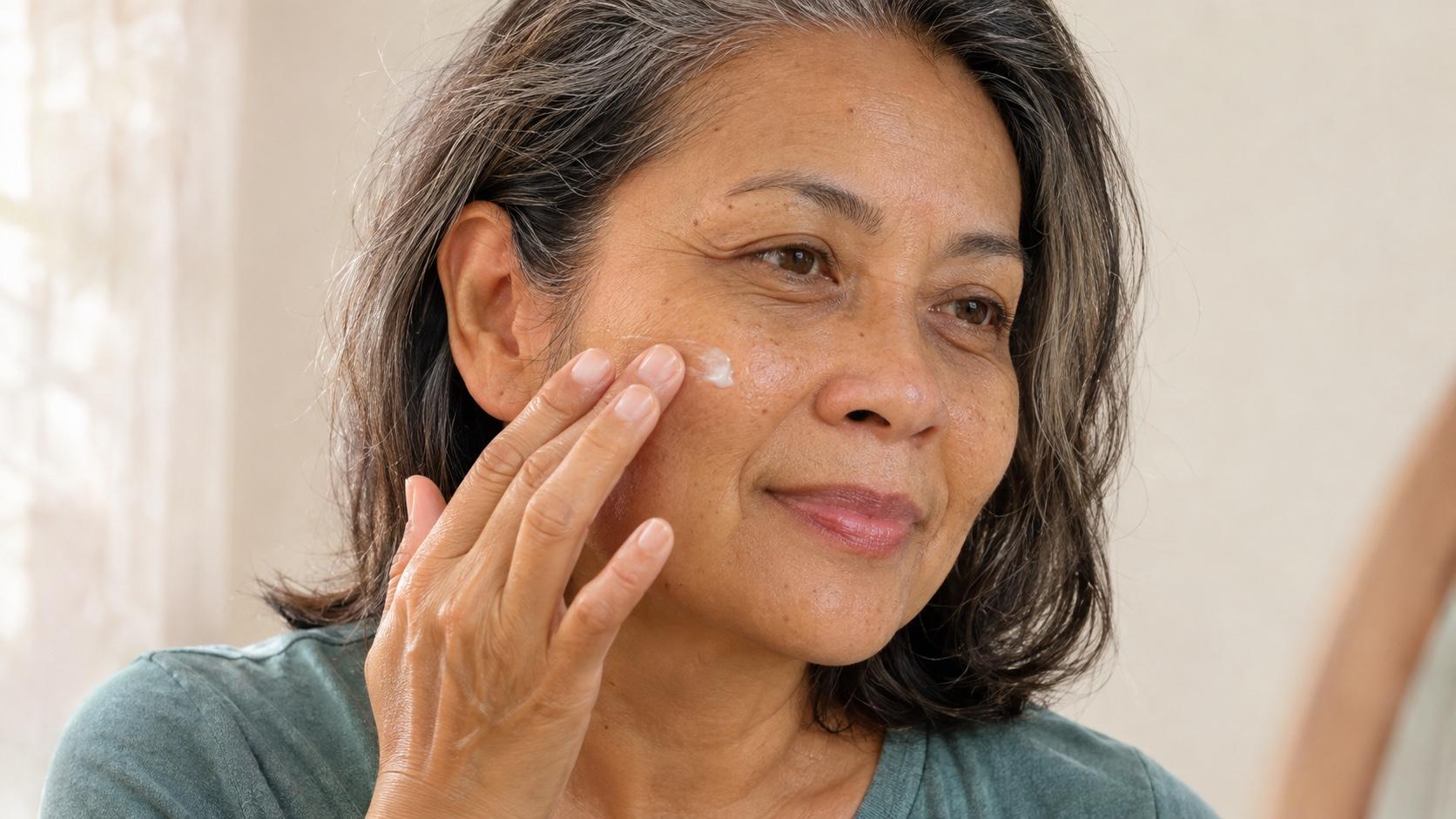
If your cheeks feel tight after washing, a gentler cleanser and a moisturiser you tolerate are sensible places to start. If the problem is a rash that keeps coming back, a spot that is changing, or hot flushes that wake you at night, speak to a doctor rather than booking a facial to find the cause. Menopause can affect how skin feels and looks, but neither a dry patch nor a photograph tells you what your hormone levels are. The useful first question is what kind of help you need: everyday comfort or an assessment of a symptom.
What does a change in collagen mean for you? In a study comparing skin biopsies before and after menopause, researchers examined samples from 32 women. The postmenopausal group had lower proportions of two types of collagen than the premenopausal group. Age was also associated with the measurements. This was a comparison between people, not a record of how quickly any one person’s face changed. It cannot tell you how much collagen you have lost, and it did not test whether a facial could restore it. Softer-feeling skin can be a worthwhile goal without making a claim about collagen.
When dryness is the main concern. Think about the point in your day when the discomfort starts. If your face feels tight as soon as you rinse off your cleanser, start with that step rather than adding a firming serum. The American Academy of Dermatology’s menopause skin-care guide notes that skin may retain less water at this stage. It recommends a mild cleanser and moisturising after bathing; a fragrance-free moisturiser is an option for easily irritated skin. You don’t need a product labelled ‘menopause’ to make either change. Judge the result by whether washing and getting through the day feel more comfortable.
When familiar products start to sting. Consider what else changed: a new exfoliant, an extra scrub night, or several new products at once. Rather than trying to polish away flakes, leave out the optional step that seems to irritate and keep a note of what happens. Our guide to giving your skin barrier a break can help you review that routine. If dryness does not settle, a rash persists or an existing skin condition worsens, see a doctor or dermatologist. There is no need to finish a jar before seeking advice.
Keep sun protection separate from moisturising. For exposed skin, choose a broad-spectrum sunscreen of SPF 30 or higher. If you are spending the morning outdoors in Malaysia, bring it with you rather than relying on the layer you put on before breakfast. Follow the label on reapplication, particularly after swimming or sweating, and use shade and protective clothing too. The FDA’s practical guide to applying sunscreen explains why water resistance does not last indefinitely. Sunscreen is for UV protection; it is not a treatment for hormonal symptoms.
When to take the question beyond skincare. Have a new or changing skin spot assessed rather than assuming it is an age spot and trying to fade it. If hot flushes, night sweats or sleep disruption are affecting daily life, tell your doctor about those symptoms as well as the skin changes. The Malaysian clinical practice guideline on menopause puts these questions in the context of your wider health. One symptom not to put on a skincare watchlist is vaginal bleeding after menopause: NHS guidance on postmenopausal bleeding advises getting it checked even if it is only spotting or happens once.
What a beauty-house discussion can offer. If your skin is otherwise comfortable and you would like to explore a hydrating facial, d’reena’s SkinBoost Treatment lists a hydrating option. It is optional cosmetic care, not a way to confirm menopause or replace hormones. Bring the names of products you use and describe what feels different, such as tightness after cleansing rather than ‘older skin’. At d’reena, a beauty house, we do not diagnose hormone status, prescribe hormones or advise on hormone replacement therapy. Those decisions belong with your doctor.
For help choosing a comfortable routine, start with Skin Analysis at d’reena. You can ask a narrow question: ‘Which step should I simplify first?’ If your main concern is a persistent symptom, a medical appointment is the better first step. For a longer view of cosmetic goals, our guide to skin longevity rather than age reversal explains why taking good care of your skin need not mean trying to turn back the clock.
Not sure this is right for your skin?
Take our 2-minute Skin Analysis for a personalised recommendation before you book.