Pico Laser Recovery: What to Expect and How to Keep Aftercare Simple
October 26, 2026
**The short answer:** There is no single aftercare timetable that fits every Pico laser session. Follow the written instructions for the exact device, settings and treatment you received; keep the routine simple while skin settles, and check with the person who performed the session before restarting exfoliants or other active products. A general blog guide cannot replace instructions tailored to your treatment.
**Why recovery can differ.** “Pico” describes a family of lasers that deliver very short pulses, not one universal machine or protocol. The treated concern, wavelength, whether a fractional lens is used, energy settings and your skin’s response can all affect what you notice and what aftercare is appropriate. d'reena’s menu lists a 45-minute Pico Laser with ProRestore, using SnowLight Pico Laser. The menu does not publish one fixed recovery schedule, so ask the team for the aftercare instructions for your specific session rather than assuming another device’s timeline applies.
**What the published study can—and cannot—tell you.** A randomized split-face study followed 59 people with acne and acne scarring after one picosecond-laser session using a microlens-array mode. In that study, participants used a mild cleanser and a hydrophilic base during the first three days; the study’s sunscreen protocol began on day four. Those details describe that study’s particular device, participants and protocol—not a rule for every Pico treatment, and not a tested protocol for d'reena’s SnowLight service. The study also found no statistically significant difference in its main pigmentation score between the two sunscreens compared. Read the study methods and results before applying its findings beyond that setting.
**Keep the first routine uncomplicated.** Use only the cleansing, moisturising and sun-protection steps your treatment instructions allow. Avoid scrubbing, picking or adding a new exfoliant, retinoid or brightening active until the person who performed the session tells you when it is appropriate to resume your routine. If your instructions and a general online schedule conflict, follow the treatment-specific guidance and ask for clarification. Our guide to retinoids around facial treatments explains why a universal pause date can be misleading.
**Plan for sun exposure carefully.** Ask when sunscreen can be applied to the treated area and what protection is suitable for your immediate recovery stage. Until then, reduce direct sun exposure where practical with shade, a hat or other physical coverage, following the instructions you were given. Once sunscreen is appropriate, use it as directed on its label; our guide to sunscreen during a long outdoor day covers reapplication in everyday settings. Do not treat sunscreen as permission to extend time in strong sun.
**Know when to ask for help.** Before leaving, confirm which temporary changes are expected, whom to contact with questions and what signs need prompt attention. Blistering, worsening pain, increasing redness or discharge are not reasons to improvise with extra products; contact the treating provider promptly and seek medical advice. For severe or rapidly worsening symptoms, seek urgent medical care. Do not try to diagnose a reaction from an online photo.
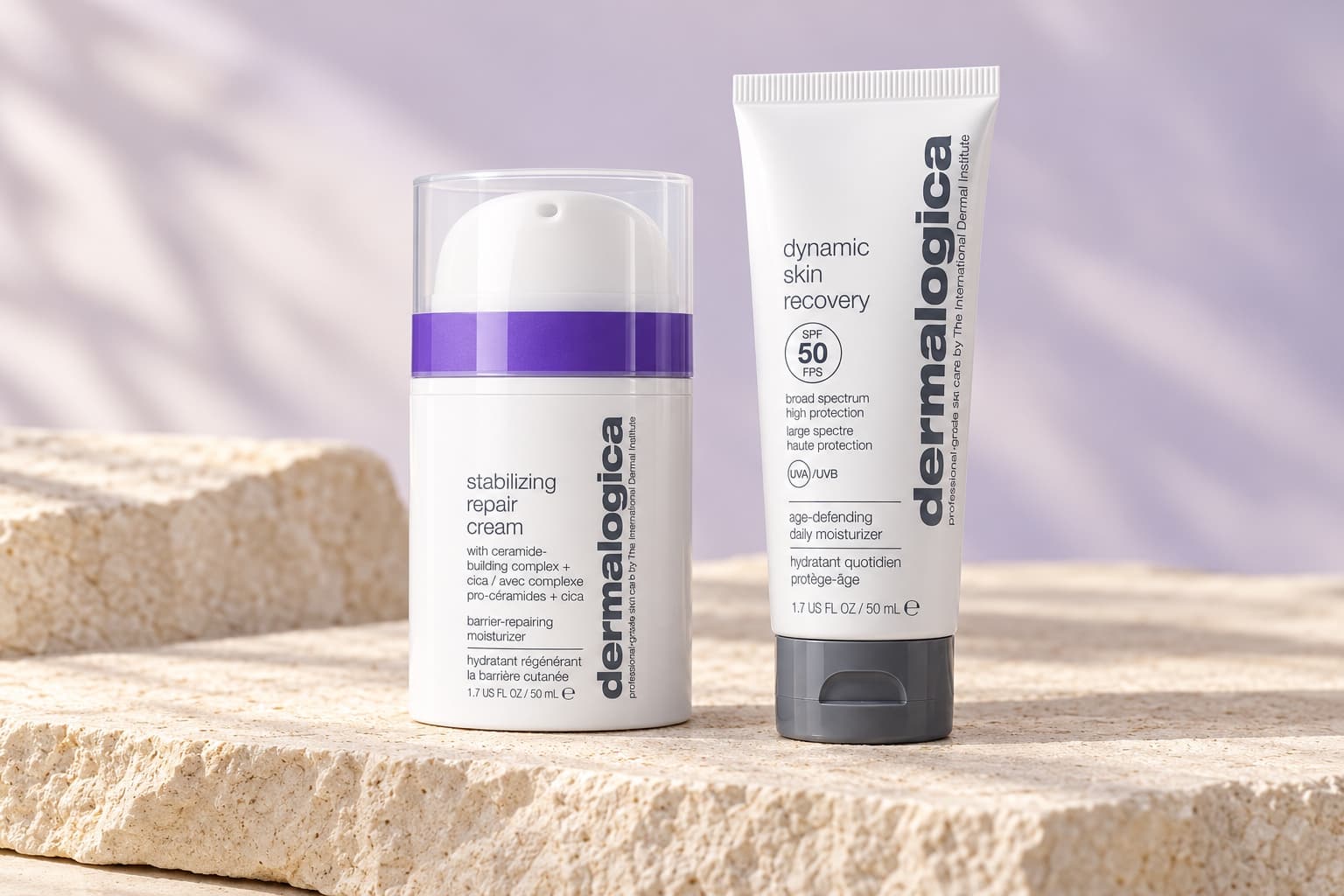
For cosmetic routine questions before or after a listed service, book Skin Analysis at d'reena, a beauty house, and bring your current products and the aftercare sheet. Skin Analysis is for cosmetic discussion; it does not diagnose a reaction or provide medical clearance. The hero is AI-generated editorial product imagery featuring Dermalogica Stabilizing Repair Cream and Dynamic Skin Recovery SPF50; it is illustrative only and does not recommend either product for immediate post-laser use or depict an actual d'reena service.
Not sure this is right for your skin?
Take our 2-minute Skin Analysis for a personalised recommendation before you book.