Pico Plus: Why We Pair Pico Laser With OPT Light
September 6, 2026
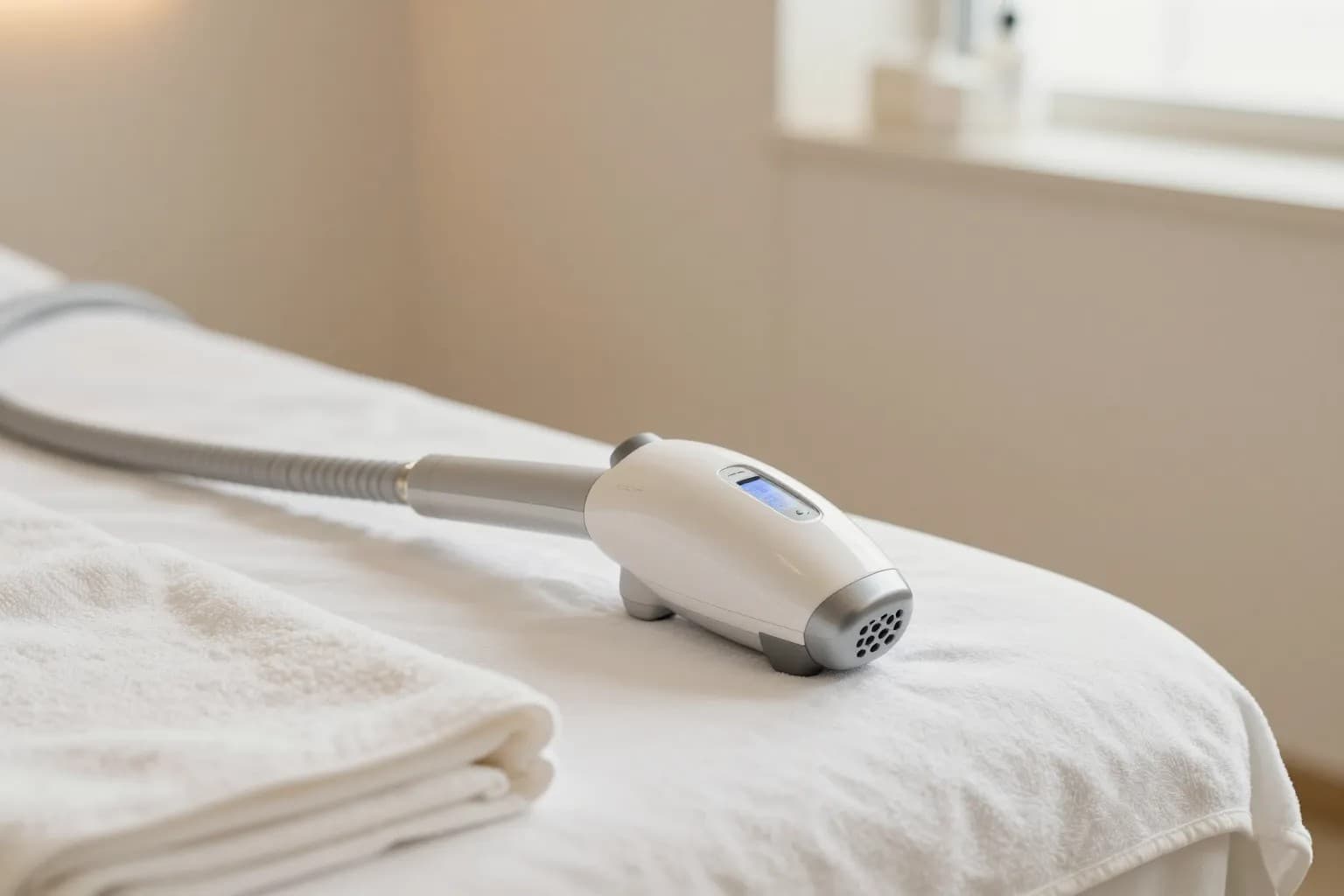
Pico Plus - Laser & Light Treatment sits in a different category on our menu than Pico Laser with ProRestore, and that placement is doing real work: one lives under Pigmentation & Uneven Tone, the other under Acne-Prone Skin. Both start from the same pico laser mechanism covered in our earlier piece on pico laser and pigmentation — ultra-short pulses measured in picoseconds that shatter pigment clusters and scar tissue photomechanically, into fragments small enough for the body's own lymphatic system to clear away, rather than heating tissue the way older pigmentation lasers do. Pico Plus keeps that same laser step, then adds a second technology alongside it in the same session: OPT, optical pulse technology.
Where the pico laser is a single, precisely timed wavelength aimed at pigment and scar tissue, OPT is broad-spectrum light, closer in principle to the pulsed light technology used for photofacials, and it's built to be absorbed by two different targets in skin. The first is haemoglobin sitting in the small blood vessels near the surface, which is what lets it calm the visible redness and dilated capillaries that often show up on acne-prone skin alongside any breakout itself. The second is porphyrins — compounds produced by the bacteria implicated in acne — which absorb that light and convert it into a reactive form of oxygen that damages the bacteria producing it, a photodynamic effect rather than a chemical antibacterial one. Neither of those targets is something the pico laser step touches on its own; OPT is addressing a genuinely separate part of what acne-prone skin is usually dealing with.
That's the actual reason for pairing the two rather than running pico laser alone. Pigmentation on its own — a flat, discoloured mark with no active breakout or redness behind it — is exactly what Pico Laser with ProRestore is built for, and it's why that treatment sits under Pigmentation & Uneven Tone by itself. Acne-prone skin is rarely dealing with just one of those things in isolation: it's often carrying old scarring and pigmentation from past breakouts alongside current redness and the bacterial load behind new ones, all at once. Running the pico laser step to fragment pigment and scar tissue while OPT works on the redness and bacterial side, in the same 30-to-50-minute session with no downtime, is what earns Pico Plus its place under Acne-Prone Skin instead — it's addressing more than one layer of the same overall picture rather than one alone.
The other benefits attached to Pico Plus follow from that same combination rather than from either technology working alone: reduced pore size and finer lines come from the mild collagen-stimulating effect both the laser and light steps produce as skin responds to that controlled stimulation, the same broad logic behind why controlled stimulation drives a repair response across other treatments on our menu. The optional Caviar ampoule and masque add-on sits alongside that as a genuine extra for anyone who wants it — a nourishing finish layered on afterward — rather than something the treatment's actual pigment- or redness-clearing mechanism depends on.
Whether Pico Plus is actually the better fit over Pico Laser with ProRestore comes down to what's genuinely going on in a given skin — whether redness and breakout activity are part of the picture alongside pigmentation, or whether pigmentation is really the whole story on its own. That's exactly what a Skin Analysis with us is for before booking either.
Not sure this is right for your skin?
Take our 2-minute Skin Analysis for a personalised recommendation before you book.