Your Face Towel and Pillowcase: When Clean Tools Matter More Than More Actives
October 4, 2026
**The short answer:** routine hygiene can reduce avoidable residue and sharing, but a face towel or pillowcase is not automatically the cause of every breakout. Before adding another active ingredient, make sure the items that repeatedly touch your face are clean, dry and used only by you. This is a practical support step—not an acne cure.
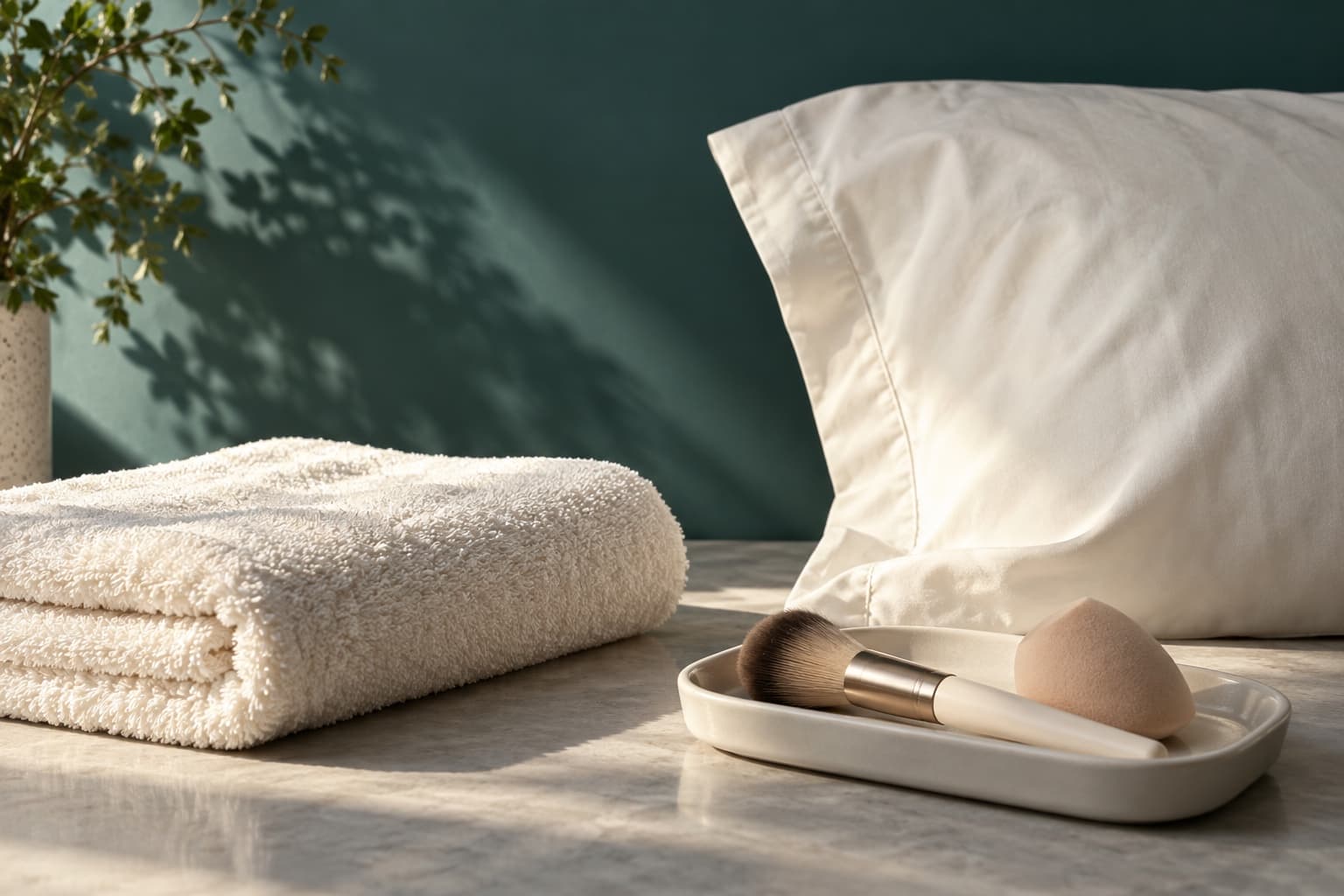
**Start with the face towel.** After cleansing with lukewarm water and your fingertips, pat rather than rub with a soft, clean towel. The American Academy of Dermatology's face-washing guidance recommends this gentle approach. Keep a dedicated face towel if that makes it easier not to share, and let it dry fully between uses.
There is no universal rule that every person must replace a face towel on the same daily timetable. Use condition as a cue: change it after heavy sweating, when it stays damp, develops an odour, carries visible makeup or product residue, or has been used by someone else. A freshly washed towel matters more than an impressive-looking stack of towels that are repeatedly left wet.
**What about the pillowcase?** Change and wash it when it is visibly soiled and sooner when sweat, hair products, makeup or skincare residue is building up. The sensible frequency depends on your sweating, products, pets and household routine. Claims that one fixed pillowcase schedule will clear acne oversimplify a condition with many possible influences. Clean fabric is helpful hygiene, not proof of treatment.
**Makeup tools need their own routine.** The American Academy of Dermatology's brush-cleaning advice recommends washing makeup brushes every seven to ten days and not sharing them. Its cosmetics hygiene guidance advises cleaning reusable sponges after each use. Follow the tool maker's directions, rinse away cleanser thoroughly and allow tools to dry completely before storing them.
**More actives cannot compensate for friction and residue.** If skin already feels tight, hot, stingy or flaky, piling on acids or scrubs may make the routine harder to tolerate. Our guide to recognising an over-treated routine explains when simplifying may be more useful than adding another step. Clean tools support the routine; they do not justify harsh cleansing.
After a sweaty day, change damp fabrics and cleanse gently rather than scrubbing. See our post-sweat body-skin guide and haze-evening double-cleansing guide for context-specific routines. Persistent painful acne, spreading irritation, swelling or broken skin deserves assessment by a qualified medical professional rather than repeated product experiments.
Start with our Skin Analysis if you would like cosmetic guidance on simplifying your cleansing, tool-care and product routine. d'reena is a beauty house, not a medical provider; Skin Analysis does not diagnose acne or other skin conditions. The hero image is AI-generated editorial still life and does not depict a d'reena service, product or treatment protocol.
Not sure this is right for your skin?
Take our 2-minute Skin Analysis for a personalised recommendation before you book.