Before-and-After Skin Photos: Is the Result Different, or Just the Lighting?
November 15, 2026
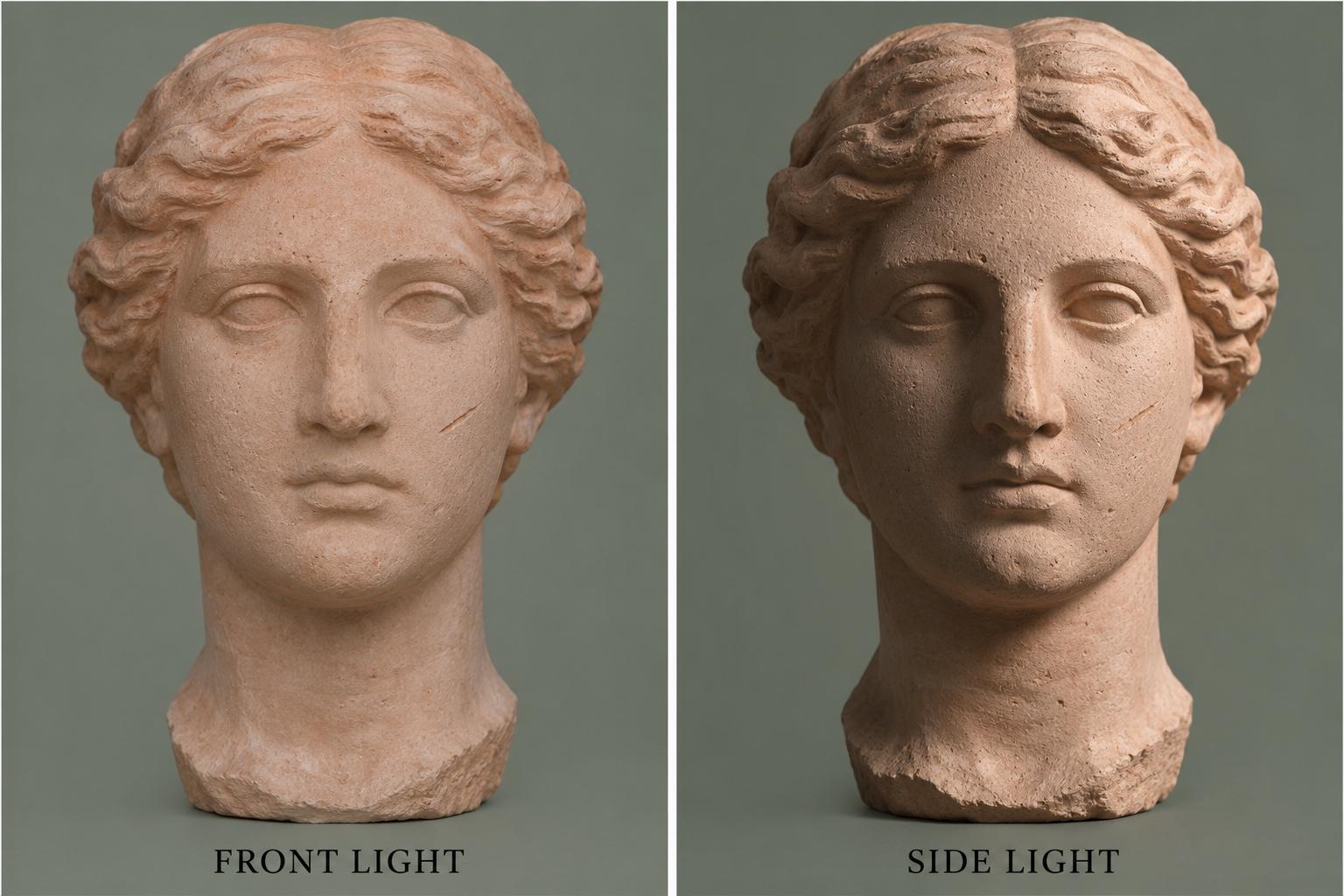
Yes, the same cheek can look smoother under soft light from the front than under light from the side. Before booking a facial because of a photo pair, look at the shadow beside the nose in each picture. If it changes sides or almost disappears, the photos alone cannot tell you how much of the apparent improvement comes from the facial. That is a reason to ask for a better comparison, not to assume the result is false.
Follow one mark through both pictures. The illustration above is an AI-generated lighting demonstration using a sculpted head, not photos of a client. Find the little diagonal scratch on the cheek. Under side light, one edge catches the light while the other casts a shadow. Under front light the mark is still there, but it draws less attention. In a photography experiment with human faces, changing the angle of the light affected how raters scored the folds running from the nose towards the mouth. Not every feature showed a significant difference. The researchers changed the lighting, not the faces.
Check the framing before comparing colour or contour. Can you see the same amount of ear in both shots? Is the chin raised in one? Is one face smiling while the other is at rest? A close-up of one cheek beside a full-face portrait also gives you less detail to compare, even if you enlarge the smaller face on your phone. In a smartphone study using skin-tone colour swatches, camera angle affected the colour and lightness recorded; distance affected lightness. Those were flat reference swatches, not people whose pigmentation had changed.
Ask what was on the skin and on the camera. If the claim is about texture, ask for two views taken with the same lighting and without a smoothing filter. If it is about brightness, ask whether both photos show bare skin or whether one was taken over tinted makeup or freshly applied moisturiser. You do not have to spot a filter by eye. “Were the same camera settings used, with beauty mode off in both?” is a fair question.
Find out what “after” means. A photo taken before someone leaves the treatment room answers a different question from one taken weeks later. Ask how much time passed, how many sessions took place and whether the person also changed their home routine. If you can see a sheen but the caption claims firmer skin, our guide to hydrated-looking versus firmer-looking skin helps separate those two observations.
Even a well-matched pair shows one person at two moments. It cannot isolate what caused a change, tell you how long it lasted beyond the second photo, or predict your result. Before paying for a course, use our before-facial consultation checklist or bring the image to Skin Analysis at d’reena beauty house. Point to the specific detail that matters to you: “It’s the texture on this cheek, not the overall glow. What would be a realistic goal for me?”
Not sure this is right for your skin?
Take our 2-minute Skin Analysis for a personalised recommendation before you book.