Hydrated-Looking or Firmer-Looking? Two Different Goals
September 25, 2026
You say you want your skin to look plumper. Do you mean that fine dehydration lines look softer after moisturising, or that the skin around your jaw and cheeks looks firmer over time? Those are different cosmetic goals. The same word is often used for both, which can make a product or facial sound more powerful than the evidence supports.
Hydrated-looking skin is mainly about water at and near the surface. A suitable moisturiser can help reduce water loss, soften roughness and make some fine lines less noticeable. The American Academy of Dermatology's guidance on moisturising explains that moisturiser traps water in skin and may give an immediate plumped appearance. That visible change can be useful, but it is not the same as permanently lifting tissue or building new collagen.
Hyaluronic acid is often discussed in this context because different forms are used in moisturising formulas. The full formula still matters: molecular weight, concentration, vehicle and the other ingredients can change performance. A 2024 randomised trial of hyaluronic-acid moisturisers in older adults with dry leg skin found improved hydration with one low-molecular-weight formula compared with a high-molecular-weight formula and its vehicle. That specific result does not prove every hyaluronic serum works identically on every face. Our hyaluronic acid explainer gives more ingredient context.
Firmer-looking skin is a slower and less direct aim. Firmness can refer to how skin resists movement, how elastic it appears or how contours look under particular lighting. These are not all the same measurement. A cream may make the surface look smoother through moisturisation without changing deeper structure. The AAD's overview of firming claims cautions that immediate plumping from moisturiser is temporary and that creams cannot produce the lifting effect of a procedure.
Peptides are another broad category, not one single ingredient with one proven result. Different sequences, concentrations and formulas need their own evidence. A recent systematic review of randomised peptide studies found inconsistent effects on elasticity and skin density, with the wrinkle result driven largely by oral rather than topical products. That is a reason to read a specific product claim carefully instead of assuming the word peptide guarantees firmness. Our peptides guide introduces the category, but the actual formula remains the important unit to assess.
Before choosing a routine, turn 'plumper' into something you can describe. Is makeup catching on dry-looking texture? Do fine lines become less visible after moisturiser? Are you concerned about a facial contour, or expecting a cream to lift it? The clearer the observation, the easier it is to separate a realistic surface-appearance goal from a structural promise that a cosmetic cannot support.
Be cautious with guaranteed collagen, permanent lifting or instant-remodelling language. Photos can also exaggerate change through lighting, expression, camera distance and temporary surface hydration. d'reena is a beauty house, not a medical provider, and we do not diagnose the cause of skin laxity or promise medical or surgical outcomes from skincare or a facial.
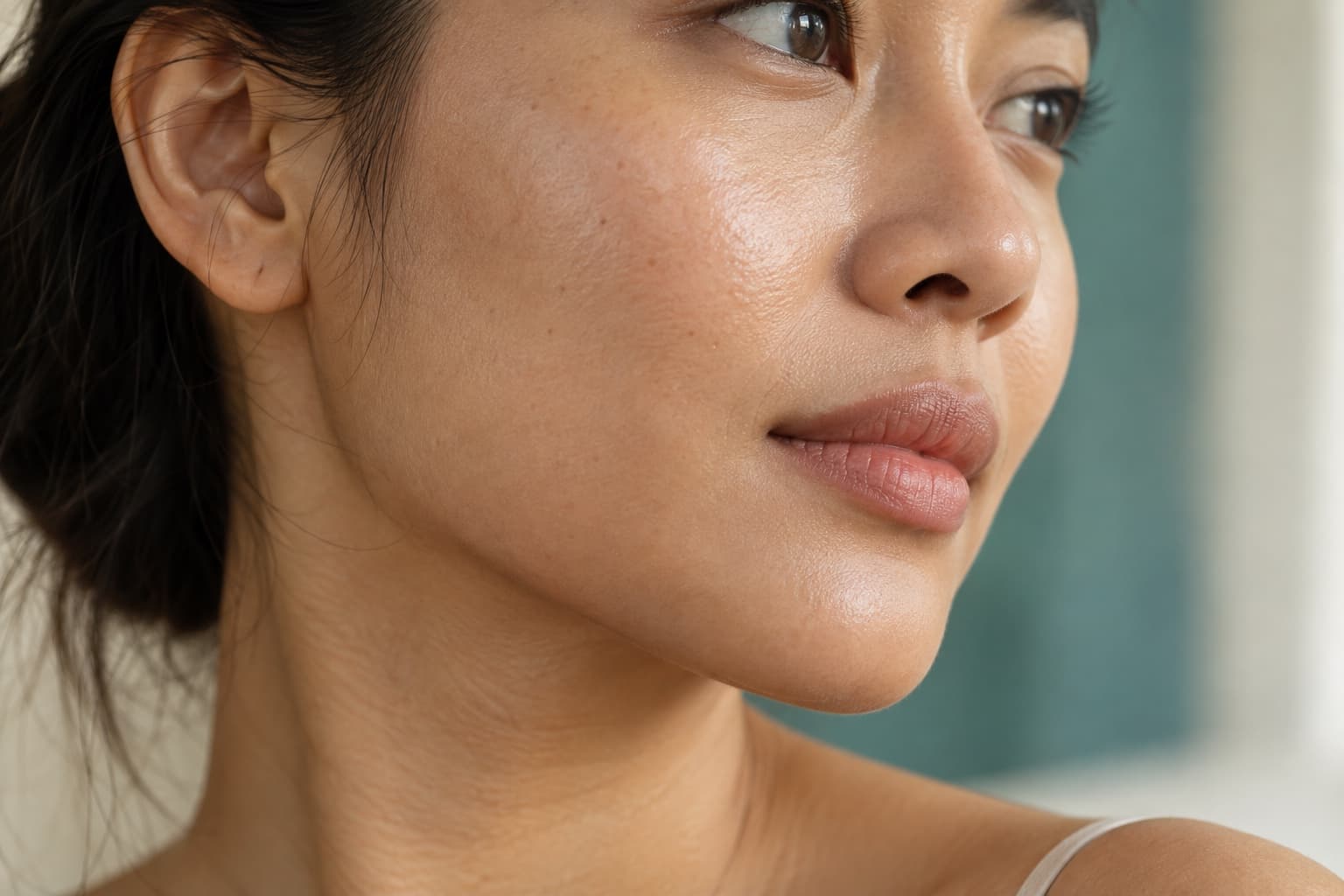
Start with our Skin Analysis if you would like help describing your cosmetic goal and reviewing the products you already use. We can discuss hydration, texture and appearance without treating 'plump' as a scientific measurement or a guarantee. The hero image is AI-generated editorial beauty imagery, not an actual client, treatment result or before-and-after photograph.
Not sure this is right for your skin?
Take our 2-minute Skin Analysis for a personalised recommendation before you book.