Sleep and Skin Aging: Useful Evidence Without “Beauty Sleep” Promises
November 9, 2026
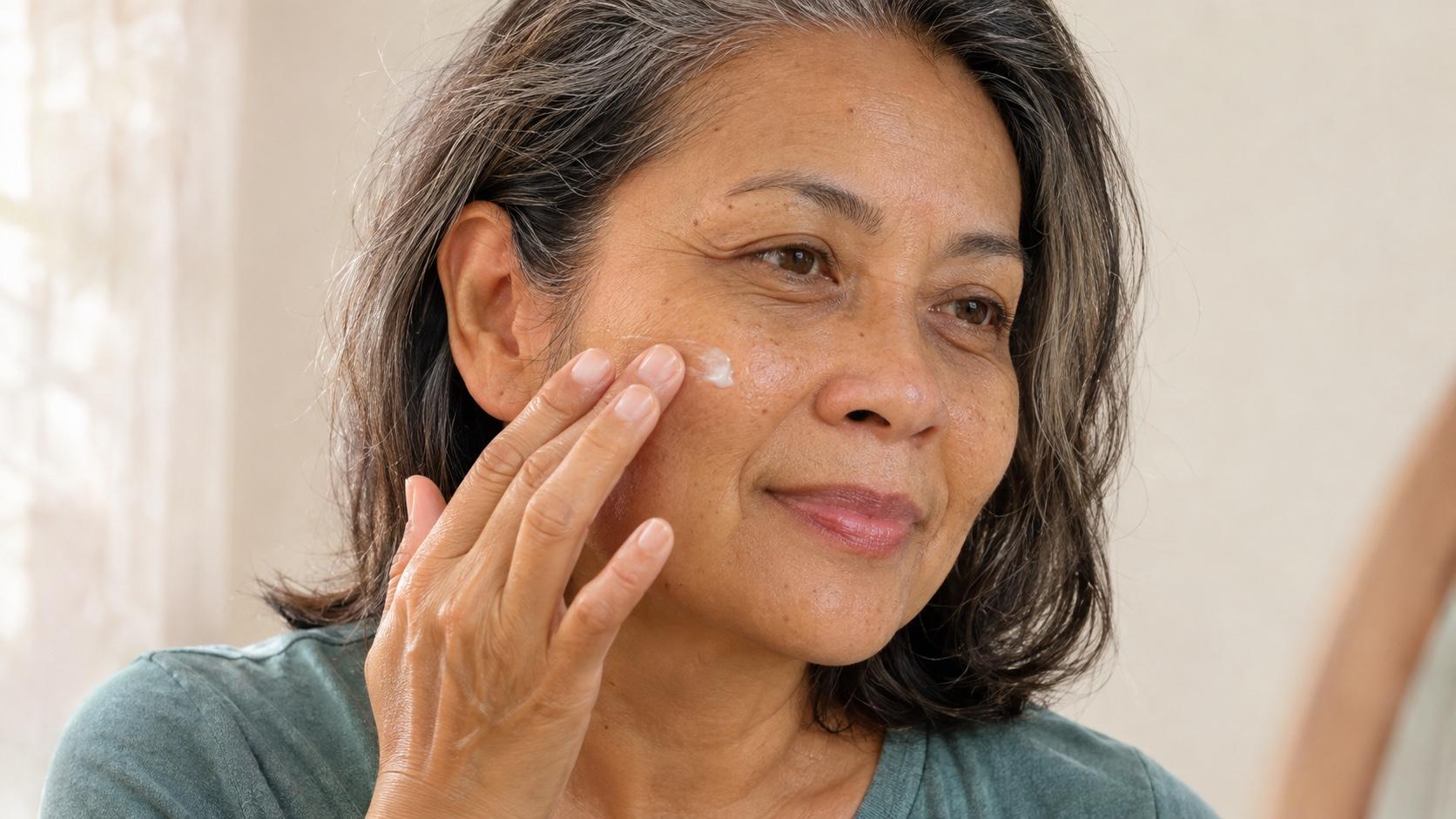
A short night can leave you looking tired the next day. That is not the same as permanently aging your skin. People who regularly sleep poorly have shown more signs of skin aging in a small human study, but it cannot tell you what one late night did to your face. If the lines around your eyes look deeper this morning, you don’t need to buy a night cream to make up for lost sleep.
What a tired face tells us. In a sleep-deprivation experiment using photographs of the same ten people, observers compared faces photographed after normal sleep with faces photographed after extended wakefulness. They saw darker under-eye circles and more drooping eyelids in the sleep-deprived photos. Comparing the same faces makes this useful evidence that sleep loss can change how someone looks. But the observers rated photographs; they didn’t measure collagen or follow those lines over years. Nor was the experiment equivalent to going to bed an hour late.
What about months of poor sleep? A study of sleep quality and skin barrier recovery in 60 women compared women who reported good sleep with women who usually slept poorly and for fewer hours. The poor sleepers scored higher on a scale of intrinsic skin aging. The researchers also gently stripped the outer skin with adhesive tape and tracked how well it limited water loss afterwards. The good sleepers showed better recovery at 72 hours. That is a measure of barrier function after a particular challenge, not a count of wrinkles gained each night. The groups already had different sleep habits, and all participants were white women. The study cannot separate sleep quality from duration, establish cause, or predict an individual Malaysian reader’s skin changes.
What to keep on a late night. If you come home wearing makeup or sunscreen and only have energy for two steps, remove it with a cleanser you tolerate and use your familiar moisturiser if your skin feels dry. Leave the optional mask or exfoliant for another day. In the morning, choose your usual sun protection for the daylight ahead. If you work nights, that might mean applying sunscreen before the trip home rather than before your shift. Our morning versus night skincare guide explains which steps are tied to daylight and which can fit your schedule.
Can an overnight product stand in for rest? Consider what you want it to do. If your cheeks feel tight and your usual moisturiser makes them comfortable, that’s a useful result. It doesn’t tell you that the cream restored lost sleep or reversed skin aging. Neither study above tested an overnight product. A label describing when to use a formula isn’t evidence that it resets your body clock; our explainer on skin’s daily rhythms covers that separate question.
When the problem isn’t the skincare. If poor sleep persists or makes daily life hard to manage, speak to a doctor; the NHS guide to sleep difficulties explains when to seek help. You don’t need a visible change in your skin to take that concern seriously. And a tired-looking face alone can’t tell anyone how well you sleep or how stressed you are, as our guide to stress and skin barrier research explains about interpreting skin changes.
If the practical question is which steps to keep when you’re tired, bring the names of your cleanser, moisturiser and any extras to Skin Analysis at d’reena. We can help you put together a manageable cosmetic routine. Assessing why you cannot sleep is a different job.
Not sure this is right for your skin?
Take our 2-minute Skin Analysis for a personalised recommendation before you book.