Eye Cream, Eye Serum or Both? Build an Eye-Area Routine Without Duplication
November 3, 2026
The short answer: you do not automatically need both an eye serum and an eye cream. Start with the job you want a product to do, then check whether your existing eye-area product already does it comfortably. A second layer is an option when it adds something useful—not a compulsory step because the first bottle says ‘serum’. The practical question is whether the combination improves your routine, not whether you have filled every product category.
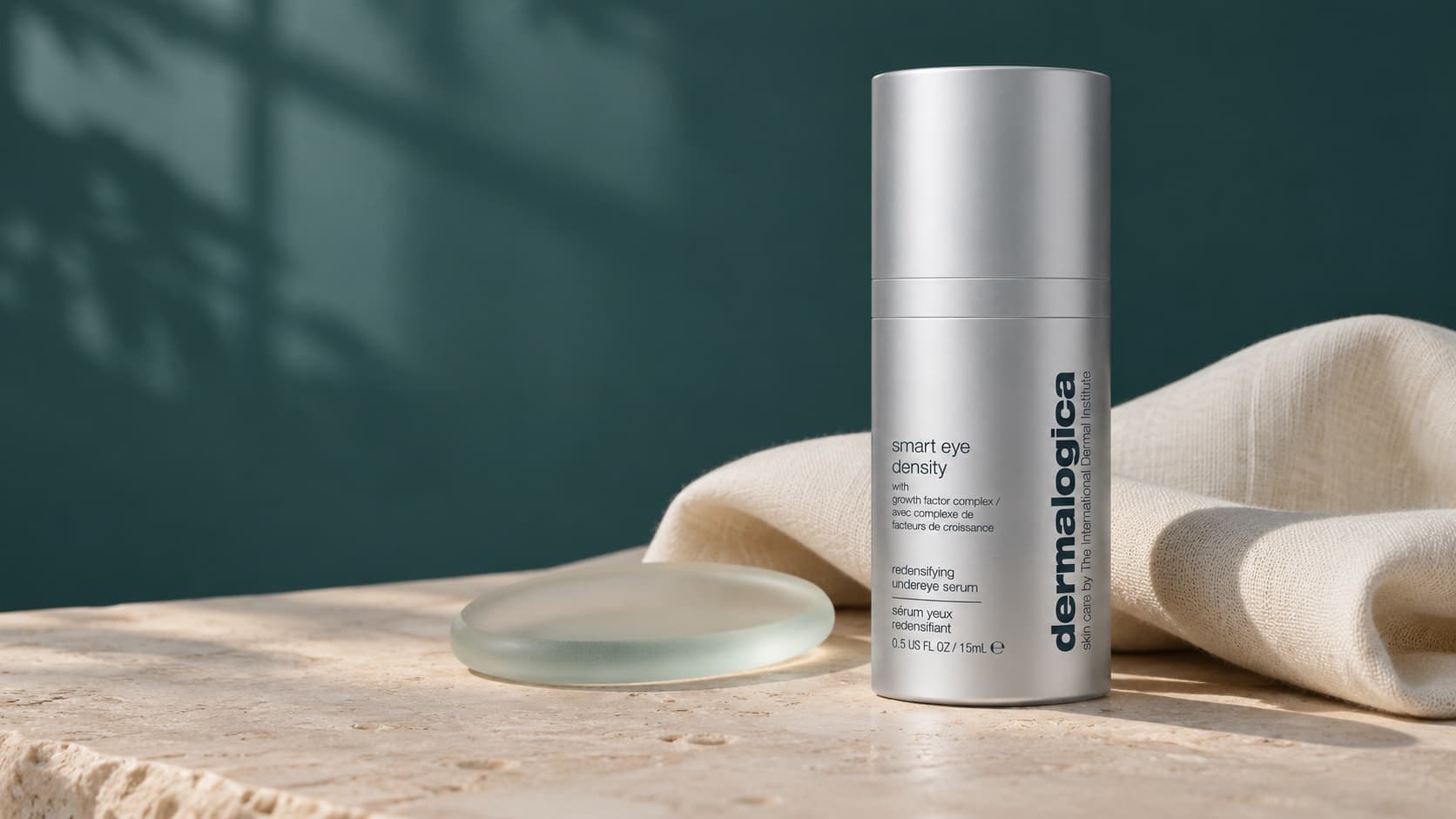
Compare roles, not just names. A serum can include moisturising ingredients, and an eye cream can have a light finish. For example, the current Dermalogica Smart Eye Density listing includes glycerin and squalane alongside its other ingredients. Dermalogica describes Multivitamin Power Firm as a silky gel-cream suitable for preparing the area before concealer. These examples challenge the simple idea that every serum is only an active step and every cream is a heavy seal. Neither the name nor the texture, by itself, establishes how well a product will meet your goal.
Give each product a job before adding it. Write down your main priority: comfortable-feeling skin, a finish that works under makeup, or a particular cosmetic appearance concern. Next to each eye product, note its intended use, application area and directions from the actual package. If two products have the same job, keep the one you prefer before testing another layer. If you cannot describe what the second product adds, you have a good reason to pause the purchase. Shared ingredients do not automatically make two formulas identical, but two different labels do not prove you need both.
When one product may be enough. If the area feels comfortable with an eye product used as directed and your makeup sits as you want it to, there is no missing step to fix. For a makeup-focused example, the official Malaysian Multivitamin Power Firm page describes using it before concealer and lists moisture-loss protection among its cosmetic benefits. That is a product-specific description, not proof that everyone needs a cream or that buying a serum as well will improve the result. Check the local packaging rather than assuming every version or reformulation is identical.
When a second layer is worth considering. Dermalogica's Smart Eye Density product-page Q&A says to apply that serum to clean skin rather than over another eye serum; an eye cream can follow if extra moisture is wanted. Treat that as an optional routine adjustment, not a promise of extra firming from layering. Introduce one change at a time, as explained in our guide to introducing new skincare. Compare comfort and how the products wear with the rest of your routine before deciding to keep both. A comfortable single-product routine is a valid outcome.
Order and placement are product-specific. For Smart Eye Density, the brand directs a small dot applied with the ring finger, gently tapped beneath the eye and along the orbital bone towards the temple, twice daily. Its guidance excludes direct eyelid application. Do not turn those directions into a rule for every eye cream: check each product's permitted area and sequence. Nor should a face serum be assumed suitable near the eyes simply because it contains a familiar ingredient. More product, a longer routine or application closer to the eye is not the aim.
What to do if the combination feels wrong. If layers roll up under concealer or feel unnecessarily heavy, remove the optional step and reassess rather than adding more to compensate. Do not treat stinging as a sign that an eye product is working. The FDA's eye-cosmetic safety guidance advises stopping a product immediately if it irritates and seeing a doctor if irritation persists; it also advises clean hands and using only products intended for the eye area. An inflamed eye area or an eye infection is not a reason to experiment with a new cosmetic layer.
Keep sun protection as a separate job. An eye serum or cream without a labelled SPF is not a sunscreen step. For daytime routines in Malaysia, retain sun protection rather than trading it for another eye-care product. The FDA's sun-protection guide recommends broad-spectrum sunscreen used as directed alongside protective measures including sunglasses and a broad-brimmed hat. Keep sunscreen out of the eyes and follow its label. Neither the presence of antioxidants nor a smooth finish under makeup substitutes for those directions.
Do not make the number of layers a results claim. This is a routine-editing guide, not evidence that two eye products work better than one for wrinkles, hollow-looking skin or discolouration. Our Smart Eye Density evidence and expectations guide separately examines that product's cosmetic claims and limitations. If your concern is a persistent symptom rather than a cosmetic preference, seek medical advice instead of trying to solve it by adding another product.
Bring your current eye products—or clear photos of their labels—to a cosmetic routine discussion with d'reena, a beauty house. Start with our Skin Analysis and tell the team what you already use, what feels comfortable and which step you are considering removing or adding. This does not diagnose eye conditions or replace medical care. The hero is an AI-generated editorial depiction of Dermalogica Smart Eye Density based on official packaging reference imagery, not a documentary photograph or a treatment-result image.
Not sure this is right for your skin?
Take our 2-minute Skin Analysis for a personalised recommendation before you book.