New Skincare? Why One Change at a Time Makes Sense
September 14, 2026

A new cleanser, serum and moisturiser arrive together. It is tempting to start the complete routine that evening — especially when you are hoping for smoother-looking skin before an event. But if your face becomes uncomfortable, which change should you look at first? Introducing one new product at a time is not a glamorous skincare tip. It is a practical way to make your observations more useful.
The American Academy of Dermatology’s product-use advice recommends starting with one new anti-ageing product rather than several at once, because multiple new products can irritate skin. Even a hypoallergenic label is not a guarantee that a product will suit you. If a cosmetic product stings or burns, do not interpret discomfort as proof that it is working. For prescribed products, ask the prescribing clinician about your reaction rather than changing medical care on your own.
For ordinary skincare products, the AAD’s small-area testing guide suggests a coin-sized area on the inner arm or elbow, using the normal amount twice daily for seven to ten days. Leave it on only as long as intended; rinse-off products should not be turned into overnight products. Follow the product’s own restrictions: a general testing suggestion is not permission to use an exfoliant more frequently than directed. If a reaction develops, wash it off and stop. A severe or persistent reaction needs a doctor’s advice.
A small-area test is not the same as a dermatologist’s medical patch test to investigate an allergy. It also does not prove that every future use will be comfortable. Treat it as an initial check, not a diagnosis or a permanent safety certificate. When the cause of repeated reactions is unclear, seek medical assessment rather than repeatedly testing suspect products yourself.
Once you begin using a new product as directed, keep a simple note: its full name, when you started, how often you applied it and anything you noticed. 'My cheeks felt tight after the evening wash' is more useful than 'my barrier must be damaged'. A photograph in similar lighting can help you describe a visible change, but it should not be used to diagnose a condition. Bring the packaging or ingredient list when asking for advice; similar-looking names do not always mean identical formulas.
Here is a practical example for a busy week in Seremban. You are happy with your usual cleanser and moisturiser but want to add something for dull-looking texture. Rather than replacing everything, first ask whether the extra step has a clear purpose. If you do add it, avoid making several other cosmetic changes at the same time. This is a way to reduce guesswork, not a fixed timetable promising results in a certain number of days. Comfort checks and judging whether appearance has improved are different questions.
There is another detail worth checking: the new product may repeat an ingredient or function you already use. An exfoliating cleanser, an acid toner and a peel are three products but can overlap in purpose. Our AHA, BHA and PHA guide explains why family names are not a strength ladder, while the ten-step skincare article considers which steps actually belong in a manageable routine. More bottles are not the goal. A routine you can explain is a better starting point than one assembled from several unrelated recommendations.
Before a facial, tell us about recent product changes and any discomfort instead of arriving with only your usual skin-type label. That context helps the conversation about cosmetic suitability and aftercare. We should not guess which product you mean, promise that a facial will undo a reaction or describe a consultation as allergy testing. d’reena is a beauty house, not a medical provider; diagnosing persistent skin problems belongs with a doctor.
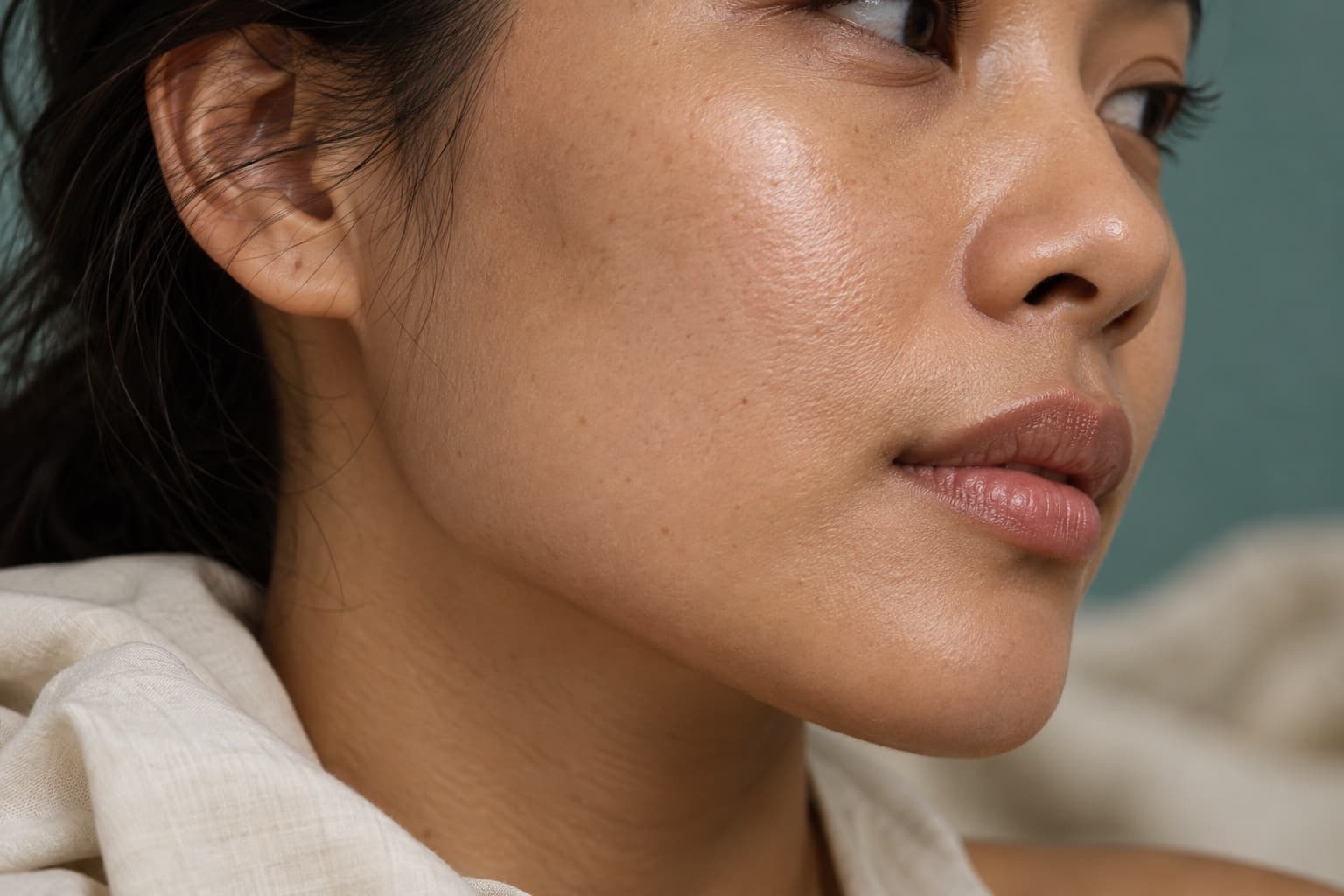
Start with our Skin Analysis if you want help organising your cosmetic concerns before a recommendation. Bring your current routine and tell us what you want to improve the appearance of, as well as what already feels comfortable. You do not need to buy or replace a complete set to have a useful conversation. One clear change, a record of what happens and realistic expectations give us more to work with than a shelf full of new products. The hero image is AI-generated editorial imagery, not an actual client photograph.
Not sure this is right for your skin?
Take our 2-minute Skin Analysis for a personalised recommendation before you book.