Instant Eye-Tightening Serums: Why the Effect Fades by Evening
November 27, 2026
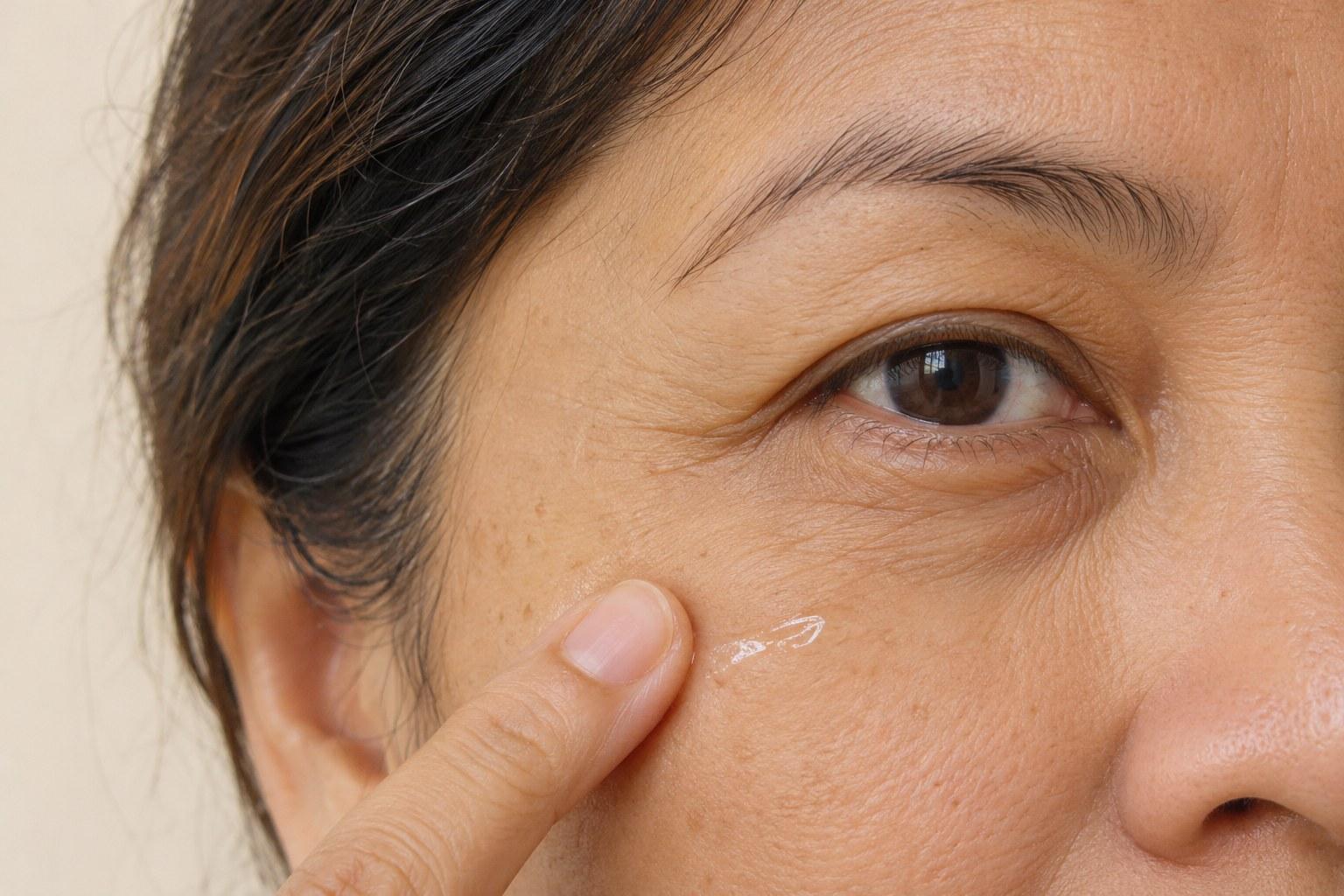
If an instant eye tightener looks impressive at first but fades later, that does not mean your skin has suddenly aged again. Film-forming formulas can temporarily smooth the surface as they dry; the visible effect is not evidence of lasting structural change. There is no universal evening expiry time, either. How long a particular product looks good needs evidence for that formula—not an assumption that every instant serum lasts the same number of hours.
How does the quick effect work? Some formulas leave a thin, contracting film on the skin. A 2019 study by Maidhof and colleagues compared seven cosmetic film formulations using laboratory measurements and a blinded clinical assessment. Expert grading found visible smoothing around the under-eye and crow’s-feet areas 15 minutes after application. The authors were affiliated with Avon Products. This is useful evidence for short-term cosmetic smoothing, but the reported 15-minute observation is not an all-day wear test or proof of collagen rebuilding. It also does not establish that every eye serum uses this mechanism.
Why might the finish fade or become flaky? A surface film has to remain cosmetically acceptable during wear. A Procter & Gamble patent on skin-smoothing films describes practical problems including cracking with facial movement, visible whitish film and incompatibility with other cosmetic layers. It discusses sodium silicate as one contractile film former and trade-offs between contraction, flexibility and appearance. A patent is the applicant’s technical account, not an independent trial proving what happened to your concealer. These are plausible formulation issues, not a diagnosis of every flake.
Is Malaysian humidity the reason? The sources above do not establish how much humidity or sweating changes wear time, so blaming the weather alone would go beyond the evidence. Nor can we promise that moving into air-conditioning will preserve the result. If you want to assess your product, try it on an ordinary day rather than first using it before an important event. Note the amount, other layers, drying time and when the finish changes. Keep lighting similar when comparing photos; a different shadow beneath the eye can look like a different result.
Can you wear concealer over it? Check the tightener’s own directions for application order, drying time and compatible makeup. There is no one layering rule that can safely replace instructions for every formula. Use the directed amount rather than adding extra to chase a stronger pull, and let it set as instructed before testing the permitted next step. If it looks acceptable alone but flakes with your usual concealer, that comparison suggests a layering problem worth discussing with the manufacturer. It does not prove your skin needs exfoliation. Our skincare pilling guide explains a related problem without treating all residue as dead skin.
What if there is a white cast? Do not assume a visible film means the product is working better, or keep adding layers to cover it. Check whether you followed the amount and preparation instructions, and ask the supplier about the full routine if the finish remains unsuitable. Avoid turning formulation research into a home recipe: laboratory ingredients and concentrations are not instructions for mixing an eye product. Appearance and comfort both matter. A dramatic first photograph is not much use if the product becomes uncomfortable or visibly patchy during the occasion you bought it for.
Does it replace an eye cream or longer-term routine? No result measured within minutes establishes lasting wrinkle improvement. An optional temporary finish and a comfortable daily routine answer different needs. Our eye cream versus eye serum guide helps you avoid duplicating steps, while firming, tightening and lifting explained separates claims that sound interchangeable. Do not assume a hydrating eye serum is a film tightener because both are sold for the eye area. Judge the specific product’s intended use and evidence.
When should you stop? The FDA’s eye-cosmetic safety guidance advises stopping a product immediately if it irritates, seeking a doctor if irritation persists, and avoiding eye cosmetics when the eye is infected or surrounding skin inflamed. Use clean hands and only products intended for the eye area; follow their placement instructions. Stinging is not evidence of effective tightening. For help reviewing cosmetic goals and routine overlap, start with d’reena’s Skin Analysis, including the exact product name and your experience. d’reena is a beauty house, not a medical provider, and this cannot diagnose eye symptoms. The hero is an AI-generated editorial illustration, not a customer or treatment result.
Not sure this is right for your skin?
Take our 2-minute Skin Analysis for a personalised recommendation before you book.