Why Skincare Pills Under Sunscreen—and What to Change First
October 1, 2026
You finish your morning routine, apply sunscreen and notice little rolls or flakes gathering under your fingers. Is your skin suddenly exfoliating? Often, this is pilling: product layers collecting and rolling on the surface as they are spread. It can look like peeling skin, but the practical clues are that it appears during rubbing and follows the path of application.
Pilling is not one ingredient's fault in every routine. The amount of each layer, how quickly they are applied, the way their films form and how much they are rubbed can all matter. A rich cream, silicone-rich primer, gel serum and sunscreen may each work well separately but sit poorly when stacked in a particular order or quantity. The finished formulas matter more than blaming an entire ingredient family.
Start by simplifying. On a test morning, use only the steps you actually need before sunscreen, following each label. If the pilling stops, add one layer back on another day rather than changing everything at once. Our one-change-at-a-time guide explains why a clear sequence makes troubleshooting easier.
Next, look at amount and timing—but do not solve the problem by under-applying sunscreen. Use modest amounts of optional serum or moisturiser where they are useful, spread each layer evenly and allow it to settle before the next step. There is no universal wait time for every formula, so follow the product directions and use the surface as your cue: if it is still very wet or moving around, another layer may disturb it.
Application technique can help. Repeated vigorous rubbing encourages semi-dried layers to gather. Try distributing the product gently, then smoothing or pressing it into place without continuing to work the same area. If pilling happens only where makeup is buffed heavily, test a lighter patting motion. Do not scrub the rolls away and immediately add several replacement layers; that makes it difficult to know what remains on the skin.
Keep sunscreen coverage as the fixed priority. The American Academy of Dermatology's sunscreen application guide recommends enough product to cover exposed skin and reapplication during outdoor exposure. Follow the directions on your own sunscreen, because format and market labels can differ. Our long outdoor-day sunscreen guide offers a practical reapplication plan without treating a thin layer as adequate protection.
If a simple routine still pills, test the sunscreen over bare, dry skin on another day, then test it over your usual moisturiser. That comparison can reveal whether the sunscreen itself rolls during application or whether a pairing is the problem. A different texture or fewer morning layers may be more practical, but no product can be guaranteed compatible with every routine. Stinging, burning, persistent flaking or a rash are different concerns and may need medical advice rather than more application experiments.
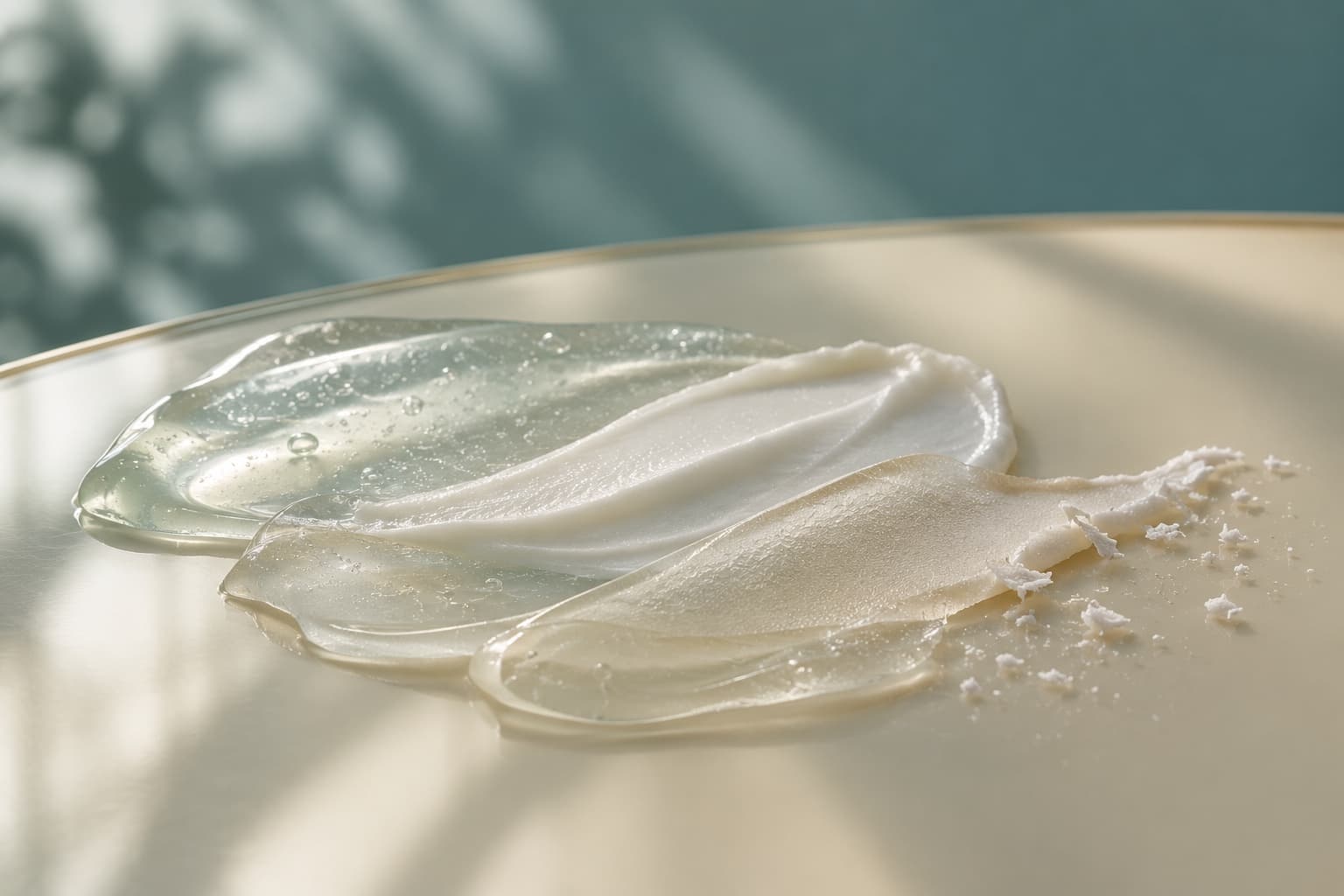
Bring the actual product names and the order you use them to our Skin Analysis if you would like help simplifying your cosmetic routine. d'reena is a beauty house, not a medical provider, and Skin Analysis does not diagnose peeling or certify sunscreen performance. The hero image is AI-generated editorial texture imagery and does not depict a product sold or used at d'reena.
Not sure this is right for your skin?
Take our 2-minute Skin Analysis for a personalised recommendation before you book.