Testing a New Skincare Product: A Small-Area Trial Is Not Medical Patch Testing
October 7, 2026
**The short answer:** trying a new cosmetic on a small area first can help you notice an obvious reaction before applying it widely. It is not the same as medical patch testing, it cannot diagnose an allergy, and a quiet test area does not guarantee that every later use on the face will be comfortable.
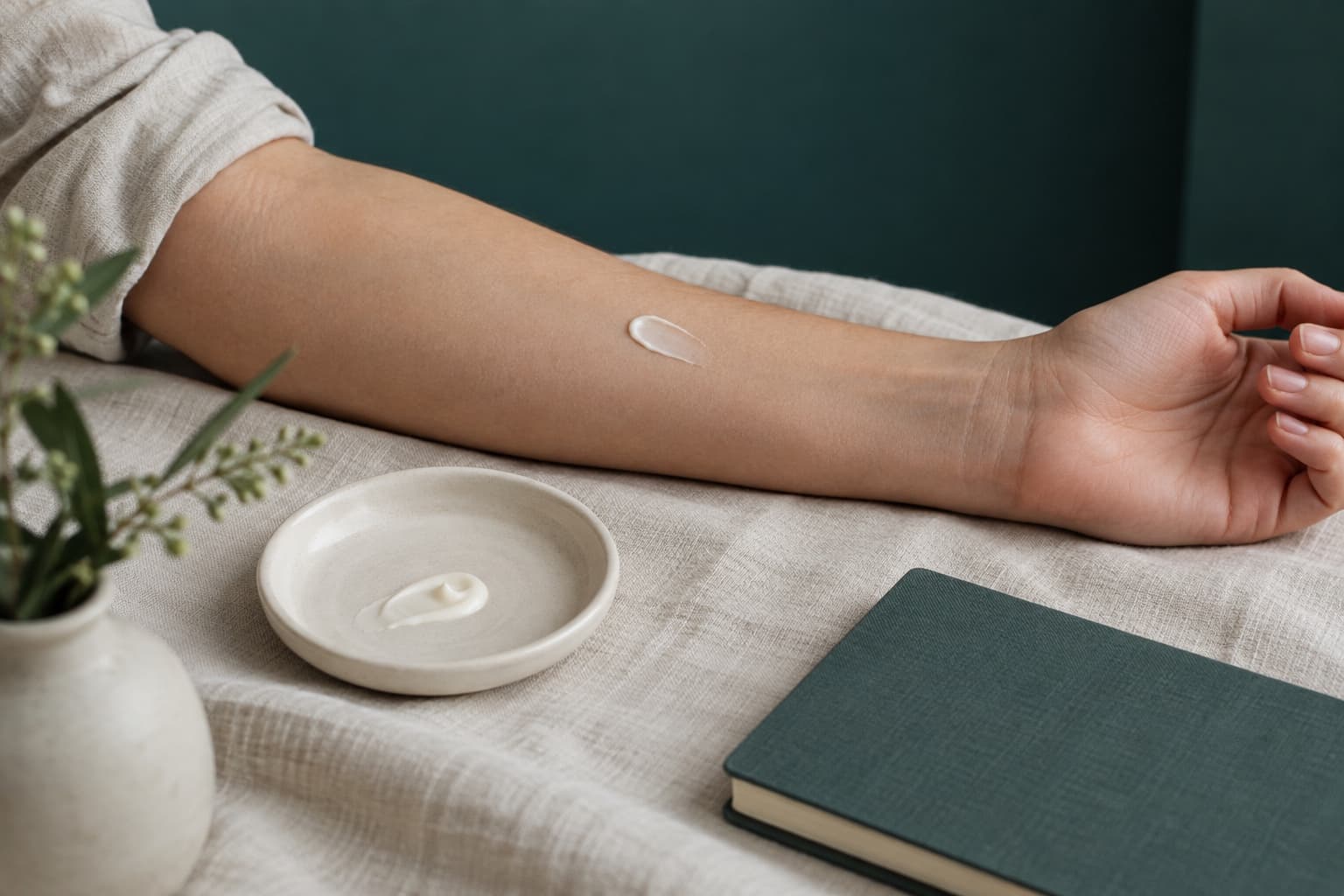
**For an ordinary cosmetic, follow the product first.** Check the directions, warnings and intended frequency. The American Academy of Dermatology's small-area testing guide suggests a quarter-sized spot on the underside of the arm or bend of the elbow, using the normal amount twice daily for seven to ten days. Do not increase the dose or frequency to make the test more ‘certain’. This is consumer guidance, not a universal protocol for prescription medicines or professional-use products.
**A wash-off product stays a wash-off product.** If you are trying a cleanser or mask, leave it on only for the label's stated time; do not turn five minutes into overnight exposure. For a leave-on moisturiser or serum, use it as directed. The question is whether the normal use pattern appears comfortable on that small area—not how much irritation the skin can withstand.
**Stop when the skin objects.** Wash the product off and stop using it if the area becomes notably red, itchy, swollen, blistered or increasingly painful. Seek urgent medical care for breathing difficulty, facial or throat swelling, faintness or a rapidly escalating reaction. A severe, persistent or recurring rash needs a doctor's assessment rather than repeated home experiments. d'reena does not diagnose reactions or advise you to push through them.
**Why is medical patch testing different?** A dermatologist may use medical patch testing when allergic contact dermatitis is suspected. Standardised allergens are applied under patches, usually on the back, and the skin is examined at scheduled follow-ups because a delayed reaction can take time to appear. The AAD explanation of medical patch testing describes a supervised diagnostic process; it is not the same as dabbing your new moisturiser on your arm.
A small-area trial also cannot tell you exactly which ingredient caused a reaction. Formula concentration, the combination of ingredients, how often you use it, the body site and the rest of your routine all matter. Labels such as ‘fragrance-free’, ‘unscented’ and ‘hypoallergenic’ do not replace observation; our guide to fragrance-free versus unscented explains why those terms answer different questions.
After a quiet small-area trial, introduce the product to your normal routine without changing several other things at once. Our one-change-at-a-time guide shows how simple notes make cause and effect easier to follow. If tightness, stinging or flaking is already building, pause the urge to add more and read our guide to recognising an over-treated routine.
Start with our Skin Analysis if you would like cosmetic guidance on simplifying how you introduce products. d'reena is a beauty house, not a medical provider; Skin Analysis is not allergy testing, medical patch testing or diagnosis. Bring the product label and your current routine so the conversation stays specific. The hero image is AI-generated editorial photography and does not depict a medical test, d'reena client or treatment protocol.
Not sure this is right for your skin?
Take our 2-minute Skin Analysis for a personalised recommendation before you book.