Sending a Selfie for Skin Analysis? What a Photo Can and Can't Tell Us
November 28, 2026
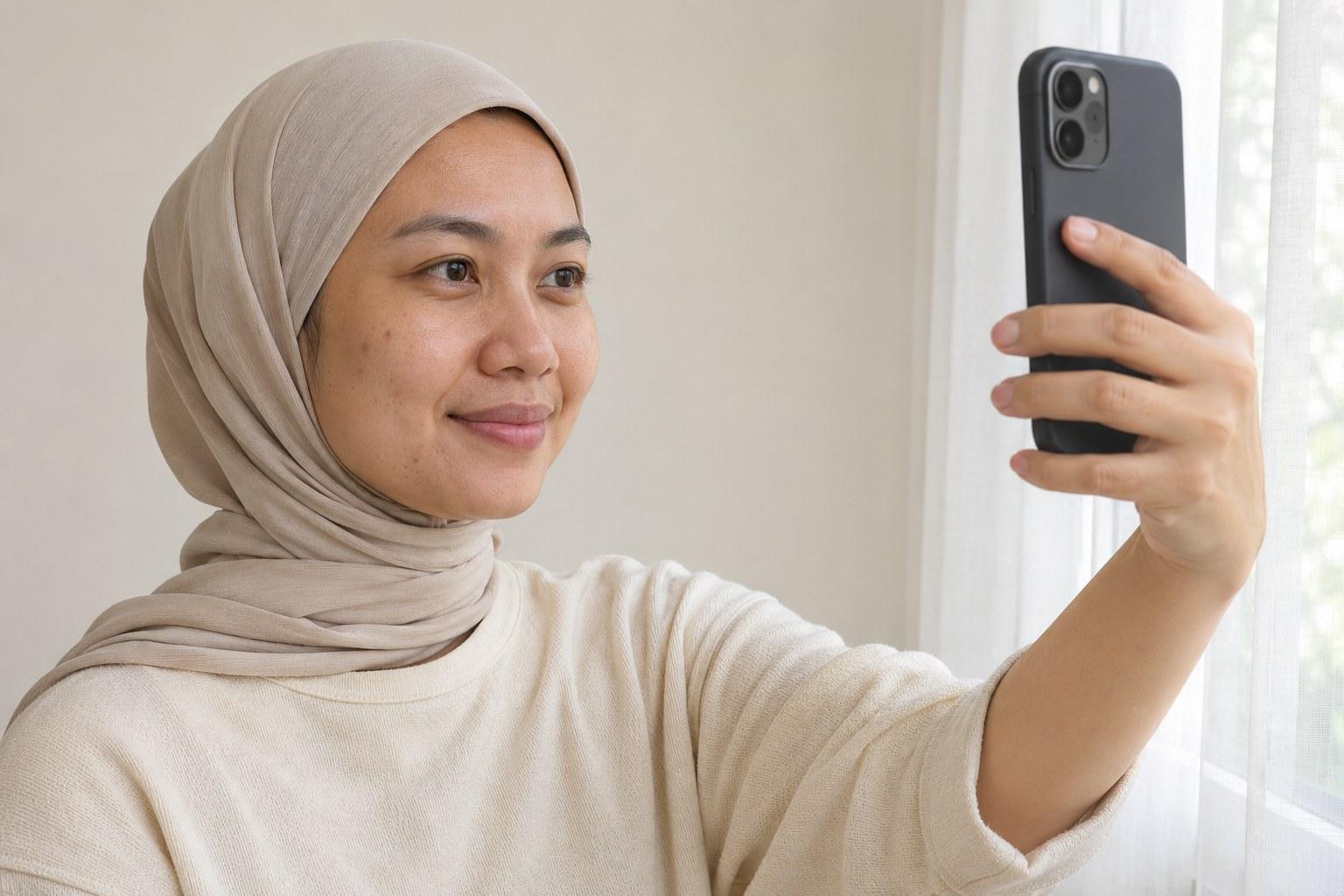
A selfie can provide visual context for a cosmetic conversation, but it cannot tell us how your skin feels or diagnose a condition. There is also an important distinction in d’reena’s current online Skin Analysis: the on-screen skin summary and treatment suggestions are generated from your questionnaire answers, not from an automated examination of your photo. A clearer selfie is useful context; it does not turn the result into a medical assessment or a measurement of your skin.
What happens in the online flow? The Skin Analysis page invites a makeup-free photo and six questions. These cover midday skin feel, visible pores, breakouts, uneven tone, fine lines or firmness, and reactivity. The current questionnaire uses those answers to produce a summary and match concerns to treatment options. Its skin-type label follows your answer about midday feel. Treat the output as a starting point to discuss, not independent confirmation of a permanent skin type or clearance for a procedure. A photo upload does not mean a therapist has already reviewed it.
What can a picture add—and what is missing? It can show how your skin looked in that particular light, including visible texture, shine or areas of uneven-looking colour. It cannot communicate tightness after washing, stinging after a serum, or a reaction that happened yesterday and has settled. Tell us those details separately when discussing your routine. For example, shiny-looking cheeks in a photograph and uncomfortable tightness in your description need not be contradictory. Our guide to bringing your routine list helps turn that experience into a more useful conversation.
Why does your skin look different in different selfies? In a 2023 study by Cronin and colleagues, researchers photographed skin-tone colour standards with smartphones. Camera angle affected colour and lightness; distance affected lightness, and flash did not generally remove that variability. These were laboratory colour standards, not a test of d’reena’s questionnaire or a measurement of error in your own face photo. The practical lesson is to avoid treating a changed image as proof of changed skin. Our before-and-after photo guide covers comparisons in more detail.
How should you take the selfie? Use a makeup-free face, a plain neutral background and bright window light falling on your face rather than coming from behind you. Turn off beauty filters and smoothing, hold the phone steady, and check that the details are in focus. Avoid glare and strong shadows. These practical tips follow the American Academy of Dermatology’s skin-photography guidance; its original context is dermatology, which is not the service d’reena provides. If removing makeup temporarily irritates your skin, allow that change to settle before taking the cosmetic reference photo. Do not scrub or exfoliate to make the picture look clearer.
What should you check before uploading? Look at the whole image, not only the face preview. Remove unrelated people, documents and identifying details from the background. Retake a blurred or heavily filtered picture rather than sharpening or retouching it into something different. If you take another reference later, keep the camera angle, distance and lighting as similar as practical. You do not need to achieve a flawless-looking photograph: ordinary visible pores and fine lines are useful context, not defects to edit away.
What happens to the information you share? The current introduction says d’reena may keep your photo, name and answers on file for the recommendation and follow-up about your visit; the phone or WhatsApp field is optional. Read that consent wording before continuing. The introduction does not specify how long photos are kept or a deletion procedure, so this article cannot promise either. If those details affect your decision, ask d’reena before uploading. Do not assume that receiving an immediate summary means the photo was deleted or personally reviewed.
When is another kind of conversation better? Discuss suitability before booking a treatment, especially if your skin is reactive or your recent product history is complicated; our facial consultation checklist explains what to bring. A growing, bleeding or changing spot needs a doctor rather than a cosmetic selfie result: the AAD advises dermatology assessment for these changes. A reassuring-looking photo cannot rule out a problem. For cosmetic goals, start with Skin Analysis, answer from your everyday experience and use the suggestions to prepare questions. d’reena is a beauty house, not a medical provider. The hero is an AI-generated editorial illustration, not a customer photograph.
Not sure this is right for your skin?
Take our 2-minute Skin Analysis for a personalised recommendation before you book.